

Doctor of Dental Surgery (DDS)

Andrea is a Registered Dental Hygienist who has transitioned into a leadership role as Regional Manager, bringing together her clinical background with a strong focus on practice growth, team development, and patient experience.
Cosmetic Dentistry in North York: A Complete Guide to Your Options
Whether it is a chipped front tooth in every photo, years of coffee stains, or a gap you have never liked, cosmetic dentistry in North York can fix the one thing that makes you hide your smile, often faster and for less than you expect. It is the branch of dental care focused on the appearance of your teeth, gums, and smile, and it covers treatments such as teeth whitening, dental bonding, porcelain veneers, tooth-coloured fillings, gum contouring, and full smile makeovers. Some take a single visit and a few hundred dollars; others are a planned transformation across several teeth. The right choice depends on what actually bothers you- colour, shape, chips, gaps, or worn edges- and how much change you want. Most cosmetic treatments are elective and usually not covered by insurance; the real Ontario prices for each are broken down further below.
Key Takeaways
- Cosmetic dentistry improves the look of your smile through treatments such as whitening, bonding, veneers, tooth-coloured fillings, gum contouring, and smile makeovers.
- Whitening changes colour only, bonding fixes small chips and gaps, and veneers reshape and recolour multiple front teeth, so the right choice depends on your specific concern.
- Some treatments are reversible and minimally invasive, such as bonding, while others, such as porcelain veneers, involve removing a thin layer of enamel and are permanent.
- Many cosmetic problems can be solved in more than one way, which is why a professional assessment matters more than picking a procedure in advance.
- Cosmetic treatments are usually elective and are generally not covered by insurance or the Canadian Dental Care Plan.
- A healthy mouth comes first: cavities and gum disease are treated before any cosmetic work begins.
Find our Dental Clinic Near You
What Is Cosmetic Dentistry?
Cosmetic dentistry is dental care chosen mainly to improve how your smile looks, rather than only to fix pain or disease. The practical difference matters: two people can have the exact same chipped tooth, and one leaves it alone while the other wants it invisible in their wedding photos. Cosmetic dentistry exists for the second person. In reality, the line often blurs, since a tooth-coloured filling repairs a cavity and looks natural at once, and a veneer can both protect a worn tooth and transform it, but what ties these treatments together is that people choose them to feel better about their smile.
The most common reasons people seek cosmetic care are discoloured or stained teeth, chips and cracks, gaps between teeth, teeth that look worn or uneven, and a general wish for a brighter, more even smile. A good cosmetic dentist starts by understanding which of these matters most to you, because that determines which treatment, or combination of treatments, will give the result you want.
It also helps to know how cosmetic dentistry differs from the two neighbouring areas of dental care. General dentistry keeps your mouth healthy through checkups, cleanings, and fillings. Restorative dentistry rebuilds damaged or missing teeth using crowns, bridges, or implants. Cosmetic dentistry overlaps with both but is defined by its goal: improving how the smile looks. In real treatment plans the three blend together, which is why the same dentist often handles all of them and looks at your smile as a whole rather than one tooth at a time.
Common Cosmetic Dentistry Procedures
Cosmetic dentistry is not a single treatment but a family of treatments. At a glance, these are the options a dentist is most likely to discuss with you:
- Teeth whitening: lightens the natural colour of teeth; the simplest and most affordable option.
- Dental bonding: tooth-coloured resin shaped onto a tooth to repair chips, close small gaps, or reshape an edge.
- Porcelain veneers: thin custom shells bonded to the front of teeth to change colour and shape together.
- Tooth-coloured fillings: restore a cavity with a natural-looking material instead of metal.
- Inlays and onlays: custom-made restorations for larger areas of damage when a full crown is not needed.
- Gum contouring: reshapes an uneven or gummy gumline to balance the smile.
- Smile makeover: a combined plan using two or more of the above to redesign the whole smile.
Teeth Whitening
Whitening is the most popular entry point into cosmetic dentistry because it is quick, non-invasive, and affordable. Professional teeth whitening in North York uses stronger, dentist-controlled gels than drugstore kits, so results are faster and more even. It only changes the colour of natural enamel, though, so it will not reshape a tooth or lighten a crown or filling.
Dental Bonding
In dental bonding, a dentist applies a tooth-coloured composite resin, shapes it, and hardens it with a curing light. According to the Cleveland Clinic , bonding is minimally invasive, usually requires little or no enamel removal, is often reversible, and can typically be completed in a single visit, making it one of the most economical cosmetic options. It is ideal for small chips, minor gaps, and single-tooth corrections.
Porcelain Veneers
Porcelain dental veneers are thin, custom-made shells bonded to the front of the teeth to change their colour, shape, and alignment at once. The American Dental Association notes that veneer placement is irreversible because a thin layer of enamel is removed and that, as a cosmetic procedure, veneers may not be covered by insurance. They are the go-to choice for a dramatic, uniform change across several front teeth.
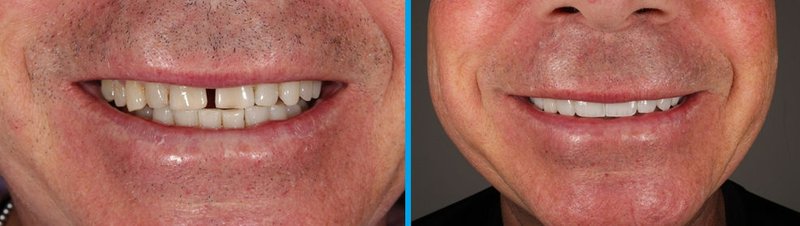
At North York Smile Centre, we had a patient with several common cosmetic concerns affecting the front teeth, including worn, uneven edges, a noticeable gap between the central teeth, and a yellowed appearance. Porcelain veneers provided a way to address these concerns together and create a more balanced, brighter smile. The finished result closed the visible gap, restored a more even length to the worn edges, and improved the overall tooth colour while keeping the smile natural-looking rather than overly uniform or artificial.
This example shows how cosmetic dentistry can make several visible changes at once when the colour, shape, spacing, and proportions of the front teeth are considered together. The goal was not simply to make the teeth whiter, but to create a more even and harmonious appearance that suited the patient's existing smile.
Smile Makeovers
A smile makeover is not one procedure but a personalized plan that combines several treatments, for example whitening the natural teeth, then adding veneers or bonding, and refining the gumline, to redesign the entire smile. It begins with a detailed consultation and often a preview of the planned result before any treatment starts.
Tooth-Coloured Fillings
Also called composite or white fillings, these restorations fill a cavity with a resin matched to your natural tooth colour instead of silver amalgam. They are a good example of how cosmetic and restorative goals overlap: the filling repairs decay, which is a health need, while blending in so the repair is invisible. For front teeth and visible areas, tooth-coloured fillings are usually the preferred choice, and older metal fillings can often be replaced with them for a cleaner look.
Inlays and Onlays
When a tooth has too much damage for a simple filling but does not need a full crown, an inlay or onlay can be the answer. These are custom-made restorations, fitted to the damaged area and bonded in place, that restore strength while matching the tooth. An inlay sits within the cusps of the tooth, while an onlay extends over one or more cusps. Because they are made to fit precisely and colour-matched, they preserve more of the natural tooth than a crown while looking seamless.
Gum Contouring
Not every smile concern is about the teeth. An uneven gumline, or a smile that shows a lot of gum tissue, can be reshaped with gum contouring, in which a small amount of gum tissue is carefully removed or reshaped to create a more balanced frame for the teeth. It is often combined with other treatments in a smile makeover, since the ratio of gum to tooth has a significant effect on how a smile looks overall.
How to Choose the Right Treatment
Because several treatments can improve the same smile, the useful question is not which procedure is best overall, but which one fits your particular concern, your budget, and how much change you want. The comparison below lines up the three most common cosmetic treatments so you can see where each one shines.
| Feature | Teeth whitening | Dental bonding | Porcelain veneers |
|---|---|---|---|
| Best for | Colour only | Chips, small gaps, minor reshaping | Colour, shape, and multiple front teeth |
| Enamel removal | None | Little to none | A thin layer is removed |
| Reversible | Yes | Usually yes | No |
| Typical time | One visit or 1 to 2 weeks | One visit | Two or more visits |
| Relative cost | Lowest | Moderate | Highest |
As the table suggests, the choice often comes down to trade-offs. Bonding is faster, cheaper, and reversible but less durable; veneers cost more and are permanent but deliver the most complete transformation; whitening is the simplest step of all when colour is the only issue. Many real cases combine treatments, using veneers on the most visible teeth and bonding for smaller corrections elsewhere.
What to Expect From a Cosmetic Consultation
Every cosmetic plan should begin with an examination, not a sales pitch. A dentist first checks that your teeth and gums are healthy, because untreated decay or gum disease must be resolved before cosmetic work. They then talk through what bothers you about your smile, examine the shape, colour, and alignment of your teeth, and explain the realistic options, along with the time, cost, and upkeep each involves. Photographs, digital scans, or a mock-up may be used to help you picture the result before committing.
“The biggest mistake patients make is deciding on a procedure before anyone has looked at their teeth. My job is to start from what is actually bothering them and what their mouth can support, then show them the options. The right plan is the one that fits the person, not the trend,” says Dr. Robert Eisen, DDS, of North York Smile Centre .
How Much Does Cosmetic Dentistry Cost in North York?
Cosmetic dentistry spans everything from a quick whitening session to a full smile makeover, so prices vary widely, but here are the real Ontario ranges people actually pay:
- Teeth whitening: roughly $300 to $1,000 for professional treatment, the most affordable way to change your smile.
- Dental bonding: about $190 to $600 per tooth in Ontario, done in one visit with no lab work.
- Composite veneers: roughly $300 to $1,500 per tooth, sculpted onto the tooth in a single appointment.
- Porcelain veneers: about $900 to $2,500 per tooth, lab-made and the most durable and natural-looking option.
- Full smile makeover: a set of 6 to 8 porcelain veneers commonly runs $9,000 to $25,000, since it bundles several teeth and treatments.
Prices scale with the number of teeth treated, the materials chosen, and the complexity of your case, which is why the only truly accurate figure is a personalized quote. Bonding is billed per tooth and stays low for a single chip; veneers cost more per tooth but deliver a bigger, longer-lasting change; a makeover is the largest investment because it redesigns the whole smile.
It is also important to plan for cost realistically: because these treatments are cosmetic rather than medically necessary, they are generally not covered by private dental insurance or the Canadian Dental Care Plan, so patients pay out of pocket. A rare exception is when a treatment also restores a damaged tooth, which may qualify for partial coverage. Many clinics offer financing or payment plans, and asking for a written treatment plan at your consultation is the best way to see the full cost before you decide.
Making Your Results Last
Cosmetic results are an investment, and how long they last depends largely on daily habits. Whatever treatment you choose, a few simple practices protect your new smile:
- Brush twice a day and floss daily to keep both natural teeth and restorations healthy.
- Keep regular dental cleanings and checkups so small issues are caught early.
- Limit staining foods and drinks such as coffee, tea, and red wine, and avoid tobacco.
- Wear a nightguard if you grind your teeth, since grinding can chip bonding and veneers.
- Avoid using your teeth as tools to open packaging, which is a common cause of chips.
Different treatments have different lifespans, and your dentist can tell you what to expect in your specific case, but good habits extend their lifespans and reduce how often anything needs to be repaired or replaced.
Are You a Good Candidate, and What Comes First?
Almost anyone unhappy with the look of their smile can benefit from some form of cosmetic dentistry, but the starting point is always oral health. Active tooth decay, gum disease, or a problem with your bite must be addressed before cosmetic treatment, because building a new smile on an unstable foundation rarely lasts. This is why a checkup and, if needed, some restorative care usually come first.
Order matters in another way too. When treatments are combined, the sequence is planned deliberately. Whitening is generally done first, because restorations such as veneers, bonding, and tooth-coloured fillings are colour-matched and will not change shade afterward. If you whiten after they are placed, they can end up looking darker than the surrounding teeth. Gum contouring is often done before or alongside veneers so the final proportions look right. A dentist maps out this order at the planning stage so every step supports the next.
Timing and lifestyle also shape the recommendation. If you grind your teeth, that may need to be managed first so it does not damage new bonding or veneers. If a big event is coming up, an in-office whitening or same-visit bonding may suit better than a multi-visit veneer plan. The point of the assessment is to fit the plan to your mouth, your goals, and your schedule.
“We almost always whiten before placing veneers or bonding, because those materials keep whatever shade we match them to. Getting the sequence right is what stops a patient from ending up with a beautiful restoration that no longer matches their teeth a year later,” says Dr. James C. H. Ko, DDS, General Dentist at North York Smile Centre .
Cosmetic Dentistry at North York Smile Centre
Choosing where to have cosmetic work done matters as much as choosing the treatment. Because these procedures shape both your appearance and, in some cases, your bite, experience and careful planning make a real difference to the result. Patients looking for a cosmetic dentist in North York at North York Smile Centre receive a full assessment, an honest explanation of their options, and a plan tailored to their goals rather than a one-size-fits-all package. The team also handles restorative and general care, so your smile is treated as a whole.
Setting Realistic Expectations
A happy cosmetic outcome depends as much on clear expectations as on the treatment itself. Cosmetic dentistry can dramatically improve a smile, but it works within the reality of your teeth, gums, and bite. Understanding a few common points up front prevents disappointment.
First, whitening lightens only the natural enamel, so any crowns, veneers, or fillings will keep their colour and may need replacing to match if you want a uniform result. Second, results are not always permanent: bonding can chip, whitening can fade, and even veneers can eventually need repair or replacement, so cosmetic work requires some upkeep over the years. Third, the most natural-looking results usually come from restraint, matching the shape and shade to your face and the rest of your teeth, rather than aiming for an unnaturally uniform, ultra-white look. A good dentist will talk you through what is achievable for your specific smile and steer you toward a result that still looks like you.
Will People Know My Teeth Are Fake?
This is the question patients ask most often before cosmetic work, and it is a fair one. Nobody wants a smile that announces itself as fake: the flat, chalky, too-perfect look people call Chiclet teeth. The honest answer is that modern cosmetic dentistry, done well, is very hard to spot, but the result depends heavily on planning and on the skill of the dentist and lab, not just the material.
A few things make the difference between natural and obvious. Porcelain, unlike older materials, is slightly translucent, so it catches and passes light the way real enamel does, rather than looking like a solid white block. A natural result also keeps tiny imperfections on purpose: teeth are not perfectly identical, the edges are not razor-straight, and the shade is chosen to suit your face and age rather than the whitest option on the shelf. The teeth in the before-and-after above are a good example; they are clearly improved, but they still read as this person's own teeth.
The look most people think of as fake usually comes from two avoidable mistakes: choosing a shade far brighter than the rest of the face can carry, and making every tooth the same size and shape. A careful cosmetic dentist prevents both by designing the smile around your proportions, showing you a preview or mock-up first, and matching the shade to look bright but believable. In other words, whether people can tell is mostly a design decision, and it is one you and your dentist make together before anything is bonded to your teeth.
Building the Smile You Want in North York
Cosmetic dentistry offers more ways than ever to improve a smile, from a single whitening session to a fully planned makeover, and the best result comes from matching the treatment to the person rather than chasing a trend. Whitening solves colour, bonding handles small repairs, veneers deliver a complete transformation, and gum contouring and tooth-coloured restorations refine the details, often working best in combination. Whatever your starting point, the process should begin with a healthy mouth, an honest conversation, and a clear plan. If you have been thinking about changing something about your smile, a consultation at North York Smile Centre is the simplest first step toward understanding your options and what they involve.
Frequently Asked Questions
Is cosmetic dentistry covered by insurance or the CDCP?
Usually not. Because cosmetic treatments are elective, they are generally not covered by private dental insurance or the Canadian Dental Care Plan. Some treatments that also restore function, such as a tooth-coloured filling, may be partly covered, so it is worth checking your plan.
Which cosmetic treatment is right for me?
It depends on your concern. Whitening is best for colour, bonding for small chips and gaps, and veneers for changing colour and shape across several teeth. Because more than one option can often solve the same problem, a consultation is the best way to decide.
Does cosmetic dentistry damage your teeth?
Done properly, cosmetic treatments are safe. Some, such as bonding and whitening, are minimally invasive, while veneers involve removing a thin layer of enamel and are permanent. A dentist will explain the trade-offs and make sure your teeth are healthy first.
How long do cosmetic dental results last?
It varies by treatment and by how well you care for your teeth. Good daily hygiene, regular checkups, limiting staining foods, and wearing a nightguard if you grind all help your results last longer.
Do I need to fix my teeth before cosmetic work?
Yes. Cavities and gum disease are treated before any cosmetic procedure, because placing cosmetic work over an unhealthy tooth can lead to problems later. A healthy foundation is part of a good result.
Can cosmetic treatments be combined?
Often, yes. A smile makeover deliberately combines treatments, for example, whitening first, then veneers or bonding, and sometimes gum contouring, to redesign the whole smile. Your dentist plans the order so the results match.
Will veneers or cosmetic work look fake?
Not when they are planned well. Porcelain is slightly translucent and reflects light like natural enamel, and a good dentist chooses a shade and shape that suit your face rather than the whitest, most uniform option. The fake look usually comes from a shade that is too bright or teeth that are all identical, both of which careful design avoids. Asking to see a preview or mock-up first is the best way to be sure.